
Zeus Coffee - Boutique Wholesaler


Arabica
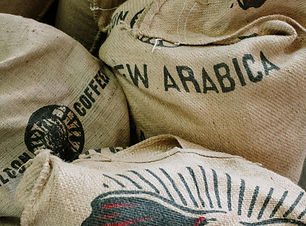
This is the Zeus Arabica selection.
Each coffee present in this section can be processed natural, fully washed,
Giling Basah, honey and experimental processing for a full customization.
The scientific name of Arabica is "Coffea arabica" originated in the mountainous highlands of southwest Ethiopia, specifically in the Kingdom of Kefa, now Kaffa, where it grew wild.
Genetic studies suggest its lineage goes back over 600,000 years.
While the exact "discovery" is steeped in folklore, the most famous legend credits a goat herder named Kaldi in the 9th century CE. He reportedly observed his goats becoming unusually energetic after eating red berries from a certain shrub and then tried the berries himself, experiencing their stimulating effects. Early uses of coffee by the Oromo tribe in Kefa involved crushing the berries and mixing them with fat to create a stimulant, rather than brewing a beverage. The stimulating properties were recognized long before it became a popular drink.
Around the 7th century, coffee beans were brought from Ethiopia across the Red Sea to the Arabian Peninsula, particularly Yemen. This is where the name "Arabica" is believed to have originated, signifying its connection to Arabia.Yemen became the first region outside Ethiopia to systematically cultivate Coffea arabica as a crop, likely starting in the 15th century. Here, Arab scholars developed the method of roasting and brewing the beans into a beverage. Coffee began its journey to Europe in the 16th and 17th centuries, largely through trade with the Ottoman Empire. Venetian merchants were among the first to introduce it to Italy in the early 17th century. European powers, eager to break the Arab monopoly, sought to cultivate coffee in their colonies. The Dutch East India Company played a crucial role. The Dutch obtained coffee seedlings from Yemen in the late 17th century. After initial attempts in India, they successfully established large coffee plantations on the island of Java (in present-day Indonesia) around 1696. This was a pivotal moment in coffee's global spread. In 1706, a single thriving coffee plant from Java was brought to the botanical gardens in Amsterdam. This plant, or its direct descendants, is the genetic source of much of the Arabica coffee grown around the world today, primarily through the Typica and Bourbon varieties. Today, Coffea arabica accounts for approximately 60-70% of global coffee production. It is prized for its complex, nuanced flavors, aromatic qualities, and lower caffeine content compared to its robust cousin, Coffea canephora (Robusta). It thrives in specific conditions: high altitudes, moderate temperatures, and abundant rainfall, making it more delicate and challenging to grow but rewarding in cup quality.

Arabica Sumatra HARIMAU
This Arabica is cultivated in Sumatra Island in the highlands between Marabi. mountain and Toba vulcano. Famous for his high quality and consistency, offer a very smooth, this coffee is available fully washed, Giling Basah (classical Indonesian method), natural and honey processed.

Arabica Sumatra ELANG
Sumatra stretches approximately 1,790 km (1,110 mi) from northwest to southeast, crossing the equator near its center. The island's interior is dominated by the Barisan Mountains (Bukit Barisan), a volcanic range that runs the entire length of the island along its western side. This volcanic activity creates incredibly fertile soil for coffee plantation and dramatic landscapes, including numerous active volcanoes like Mount Kerinci, and crater lakes. This rich coffee is available fully washed, Giling Basah, natural and honey processed.

Arabica Java SINGA
This Arabica is cultivated in Java Island in the highlands between Bromo mountain and Kawah Ijen volcano. Famous for his complexity and balanced aromas, this coffee is available fully washed, Giling Basah (classical Indonesian method), natural and honey processed.

Arabica Pulu PRINCESS RAJA
"Pulu Pulu" is a specific locality primarily known for its high-altitude coffee production within the Toraja region of South Sulawesi, Indonesia. Princess Raja Pulu Pulu coffee is highly regarded for its unique flavor profile, often described with notes like mandarin, lychee, florals, Davidson's plum, blackcurrant, caramel, mellow citrus acidity, roasted nut, and palm sugar. The high altitude and unique microclimate contribute to these distinct characteristics. This very sweet coffee is availableully washed, Giling Basah and honey processed.

Arabica Flores GURUH
This Arabica is cultivated in the main island of Flores and several smaller surrounding islands. Situated in East Nusa Tenggara province, it lies between Sumbawa to the west and the Alor archipelago to the east. Vibrant and clean this coffee is available fully washed, Giling Basah, natural and honey processed.

Arabica Sumatra / Java EXPERIMENTAL
This crucial stage profoundly impacts the
final flavor, aroma, and body of the brewed coffee. The choice of processing method is often dictated by factors like climate, water availability, and the desired flavor profile.
There are three main traditional processing methods, plus a unique Indonesian variation, and a growing number of experimental techniques.
Here at Zeus Coffee you can choose among:
Natural Coffee
Washed Coffee
Giling Basah
Honey Processed Coffee
Anaerobic Fermentation
Carbonic Maceration
Co-Fermentation
Thermal Shock